
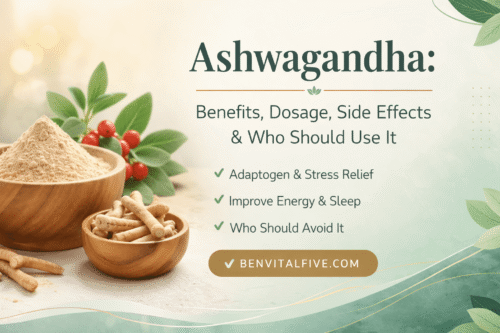
Ashwagandha Benefits, Dosage, & Side Effects: The 2026 Evidence-Based Guide
Introduction
Can a 3,000-year-old root really outperform modern stress-management tools? In the world of traditional medicine, few herbs have gained as much modern scientific validation as Ashwagandha (Withania somnifera).
Known as “Indian Ginseng,” this adaptogen doesn’t just “mask” symptoms; it works at a cellular level to harmonize your nervous system. Whether you are looking to lower cortisol, improve deep sleep, or boost athletic recovery, this 2026 update breaks down the clinical reality behind the hype.
Quick Summary
| Category | Key Information |
| Best For | Stress, anxiety, deep sleep, and physical recovery |
| Optimal Dosage | 300–600 mg/day (standardized extract) |
| Best Time to Take | Morning: Chronic stress/Focus | Evening: Sleep support |
| Primary Mechanism | Regulates the HPA axis to lower cortisol |
| Key Cautions | Pregnant women, thyroid medication and autoimmune conditions |
What Is Ashwagandha?
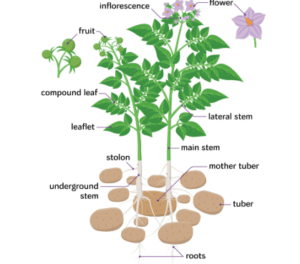
Ashwagandha is an adaptogenic shrub native to India and North Africa. The term “adaptogen” refers to its unique ability to help your body adapt to biological and psychological stressors.
Unlike stimulants that push you “up” or sedatives that pull you “down,” Ashwagandha is a modulator. It helps bring your body back to a state of equilibrium (homeostasis) by regulating the adrenal glands.
Top 5 Science-Backed Benefits
1. Stress & Cortisol Reduction
Ashwagandha’s most established role is lowering cortisol, your primary stress hormone.
The Evidence: A 2021 systematic review of 491 adults found that doses of 500–600 mg/day significantly reduced self-reported stress and serum cortisol levels by up to 30%.
Pro-Tip: If you suffer from “tired but wired” syndrome, Ashwagandha helps blunt the evening cortisol spikes that keep your mind racing.
2. Enhanced Sleep Quality
The species name somnifera literally means “sleep-inducing.”
The Evidence: Research involving both healthy adults and those with insomnia shows that standardized extracts (like KSM-66) improve sleep latency (falling asleep faster) and overall sleep efficiency.
The 2026 Insight: Recent studies suggest it may improve morning alertness as well, unlike traditional sleep aids that leave a “hangover” effect.
3. Cognitive Function & Memory
By reducing oxidative stress in the brain, Ashwagandha acts as a neuroprotective agent.
The Evidence: Clinical trials show improvements in attention, processing speed, and executive function.
Internal Resource: Learn more about how best adaptogens for focus can complement your deep-reading practice.
4. Muscle Strength & Physical Performance
It is a favorite among athletes for its impact on VO2 max and recovery.
The Evidence: Studies in the Journal of the International Society of Sports Nutrition demonstrate that it aids in muscle protein synthesis and significantly increases bench press and leg extension strength compared to placebos.
5. Thyroid Support
For those with subclinical hypothyroidism, Ashwagandha may help normalize TSH and T4 levels.
CRITICAL CAUTION: If you are already on thyroid medication (like Levothyroxine), Ashwagandha could cause hyperthyroidism. Never combine them without medical supervision.
The “BenVitalFive” Guide to Dosage & Selection
Choosing Your Extract: KSM-66 vs. Sensoril
Not all Ashwagandha is created equal. Look for these two “Gold Standard” versions:
KSM-66: A root-only extract. It is the most “balanced” and widely researched for general stress and athletic performance.
Sensoril: Uses both roots and leaves. It is more potent (typically 10% withanolides vs. KSM-66’s 5%) and is often better for severe anxiety or deep sedation.
Protocol & Cycling
To prevent your body from building a tolerance, we recommend the “5-2 Strategy”:
Dosage: 300 mg twice daily with food.
Cycling: Take for 5 days, then 2 days off. Alternatively, take it for 8 weeks and then take a 2-week break.
Safety, Side Effects, & Who Should Avoid It
While generally safe, Ashwagandha can cause mild digestive upset or drowsiness in high doses.
Do NOT take Ashwagandha if you are:
Pregnant: It may stimulate uterine contractions.
Autoimmune Patients: It “boosts” the immune system, which could worsen conditions like Lupus or Rheumatoid Arthritis.
Scheduled for Surgery: Stop use 2 weeks before surgery as it may affect the central nervous system when combined with anesthesia.
Always consult your doctor before starting Ashwagandha, especially if you take any prescription medications.A Note on Emotional Blunting: Some users report “Anhedonia” (feeling flat or emotionless) after long-term, high-dose use. If you feel “numb,” reduce your dose or start a cycling protocol immediately.
How to Choose the Best Ashwagandha Supplement
Best Forms:
| Form | Pros | Cons |
| Capsules (KSM-66 / Sensoril) | Standardized, effective | Slightly expensive |
| Powder (Churna) | Traditional, affordable | Inconsistent potency |
| Tincture | Easy to use | Lower standardization |
- KSM-66 (balanced effects)
- Sensoril (stronger stress support)
How to Take Ashwagandha
Ashwagandha is available in several forms, each with its own considerations:- Root powder (churna): The traditional Ayurvedic form. Mix with warm milk and honey. Absorption is good but standardization of active compounds is variable.
- Standardized root extract capsules: The most reliable form for consistent dosing. Look for KSM-66 or Sensoril branded extracts, which are the most studied.
- Liquid tinctures: Convenient but often less standardized.
FAQ
Is it addictive? No, it is non-habit forming.
Does it boost testosterone? Evidence suggests a modest increase in men, particularly those under physical stress or dealing with infertility.
How long to see results? While some feel it in days, most clinical benefits (like hormonal balance) take 6–8 weeks of consistent use.
Final Takeaway
Ashwagandha is a powerful “multiplier” for your health, but it isn’t a magic pill. At BenVitalFive, we believe true wellness is built on five pillars: Sleep, Nutrition, Stress Management, Movement, and Strategic Supplementation. Use Ashwagandha to support your foundation, not replace it.
About the Author Jesuraj is a wellness researcher and health optimization specialist focused on the intersection of modern neuroscience and traditional herbalism. As the founder of BenVitalFive, he spends hundreds of hours auditing clinical trials to provide objective, fluff-free analysis that empowers individuals to optimize their vitality.
Disclaimer: This article is for informational purposes only and does not constitute medical advice. Always consult a healthcare professional before beginning a new supplement regimen.
Key Takeaways
- Ashwagandha is one of the most research-supported adaptogenic herbs, with strong evidence for stress reduction and sleep improvement
- The effective clinical dose is 300 to 600mg of standardized extract daily for at least 6 to 8 weeks
- It is safe for most adults but should be avoided during pregnancy and by those with autoimmune conditions
- Quality matters — choose standardized extracts (KSM-66 or Sensoril) over raw powders for consistent results

