
Affiliate Disclaimer
This post contains affiliate links. When you buy through these links, I may earn a small commission at no extra cost to you.
Introduction
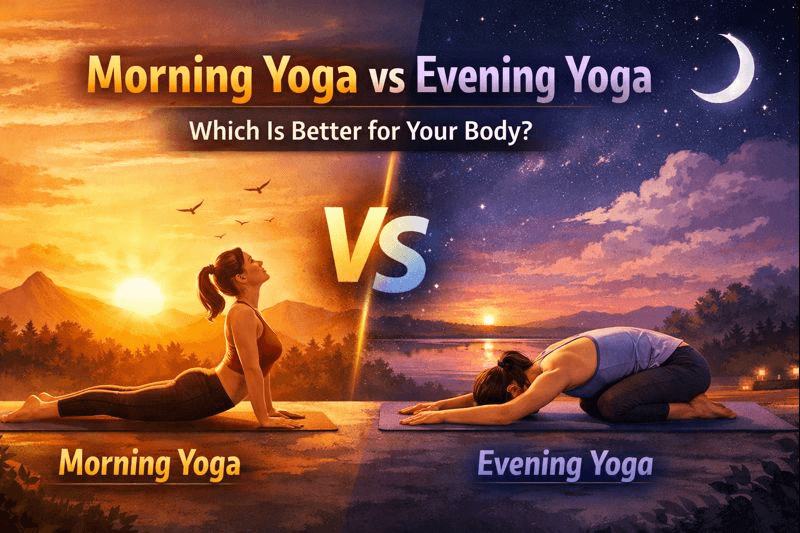
Morning yoga vs. evening yoga is a common question for those seeking better energy, flexibility, sleep, and stress relief. The best time to practice yoga depends on your physical health. The nervous system, metabolism, and daily routine respond to movement, breath, and recovery.
When practiced mindfully, yoga at any time of day can improve physical health, mental clarity, and emotional balance. The key is understanding how different times affect your body.
When is the ideal time to do yoga?
The best time to do yoga depends on your circadian rhythm, stress levels, and lifestyle. Morning yoga aligns with your natural cortisol rise for alertness, while evening yoga activates your relaxation response to promote rest and sleep.
According to Harvard Health Publishing, combining gentle movement with deep breathing helps improve blood circulation. Also calms the nervous system and supports healthy hormone balance, all of which are important for everyday well-being.
The best time to do yoga depends on your body’s goals.
Your body follows a circadian rhythm, a 24-hour internal clock that controls hormone release, digestion, alertness, and sleep. Morning cortisol levels are naturally higher, making morning yoga ideal for energy and focus. Evening yoga lowers cortisol and activates the parasympathetic nervous system, which promotes relaxation and sleep.
Morning yoga is best for energy, focus, and metabolism.
Evening yoga is best for relaxation, flexibility, and sleep.
Your nervous system and daily schedule determine which is better for you.
Is morning yoga better than evening yoga?
Morning yoga is better if you want:
- More energy
- Mental clarity
- Strong daily discipline
Evening yoga is better if you want:
- Less stress
- Deeper stretches
- Better sleep
Both are effective—consistency matters more than timing.
Does evening yoga improve sleep?
Yes. Evening yoga improves sleep by activating the parasympathetic nervous system. It lowers heart rate, relaxes muscles, and prepares the brain for deep rest. Slow stretches and breathing before bed reduce cortisol and calm the mind.
Can you do yoga both morning and evening?
Yes. Doing short yoga sessions in the morning and evening provides the best results:
- Morning yoga increases energy
- Evening yoga improves recovery.
This creates a full-day balance for the nervous system.
Benefits of Morning Yoga
Morning yoga energizes the body and prepares the mind for productivity and focus.
1. Increases Energy & Metabolism
Stretching and breathwork in the morning boost oxygen supply, blood flow, and digestion. This activates your metabolic system and prevents sluggishness throughout the day.
2. Improves Focus and Mental Clarity
Morning yoga calms the mind while stimulating alertness. It helps you stay focused and emotionally balanced during work and decision-making.
3. Builds a Consistent Wellness Routine
Practicing early helps you stay disciplined. When movement becomes part of your morning ritual, long-term consistency becomes effortless.
To build long-term mindfulness and self-control through yoga, Yoga Beyond the Mat
Benefits of Evening Yoga
According to the National Center for Complementary and Integrative Health (NCCIH), evening yoga improves sleep and emotional balance. Yoga reduces stress, anxiety, and nervous system overactivity.
Evening yoga helps your body shift from “stress mode” into “recovery mode.”
1. Releases Stress and Tension
Slow poses and deep breathing lower the heart rate. And also activate the parasympathetic nervous system, which relaxes muscles and soothes the mind.
The National Center for Complementary and Integrative Health (NCCIH) confirms yoga reduces stress hormones and anxiety.
2. Improves Flexibility
Muscles are warmer in the evening, allowing deeper stretches with less risk of injury.
3. Enhances Sleep Quality
Evening yoga prepares the nervous system for rest, helping you fall asleep faster and sleep more deeply.
If sleep issues are linked to overthinking or stress, this also connects strongly with self-discipline and procrastination.
Morning Yoga vs Evening Yoga (Comparison)
| Health Goal | Morning Yoga | Evening Yoga |
| Energy | High | Low |
| Stress | Prevents buildup | Relieves accumulated stress |
| Flexibility | Moderate | High |
| Sleep | Indirect | Direct |
| Metabolism | Boosts digestion | Neutral |
Yoga Accessories for Morning & Evening Practice
Using the right yoga accessories improves comfort, consistency, and safety—especially when practicing at different times of day.
1. Non-Slip Eco Yoga Mat
Best for: Morning energy flows & evening relaxation
A high-grip yoga mat prevents slipping during Surya Namaskar, standing poses, and slow stretches.
2. Yoga Bolster & Cushion Set
Best for: Evening yoga, deep stretching & sleep preparation
Bolsters support hips, knees, and the spine during restorative poses.
3. Meditation Cushion
Best for: Morning breathing, focus & mindfulness
A meditation cushion improves posture and breathing during seated practices.
4. Interval Yoga Timer App/Device
Best for: 10-minute morning & evening routines
Helps you stay consistent with short, effective yoga sessions.
Which Is Better for You?
Choose morning yoga if you want:
- Higher energy
- Better focus
- Strong daily discipline
Choose evening yoga if you want:
- Deep relaxation
- Improved flexibility
- Better sleep
For balanced wellness, combine yoga with light walking for circulation.
Learn how walking boosts overall health here → Benefits of Walking
Can You Do Both Morning and Evening Yoga?
Yes. In fact, doing short morning and evening sessions gives the best results.
Many practitioners follow:
- 10 minutes of energizing yoga in the morning
- 10 minutes of relaxing yoga at night
This keeps your nervous system balanced all day.
This approach works especially well when paired with mindful movement like the
6-6-6 Walking Method
FAQs – Morning Yoga vs Evening Yoga
Is it better to do yoga in the morning or evening?
Both are beneficial. Morning yoga improves energy and focus, while evening yoga improves flexibility and sleep.
Should yoga be done on an empty stomach?
Yes. Practicing yoga at least 2–3 hours after eating allows better movement, balance, and digestion.
Does evening yoga help sleep?
Yes. Slow poses and breathing calm the nervous system, helping you fall asleep faster.
Can I only practice yoga at night?
Yes. Consistency matters more than timing.
Does yoga reduce stress at any time?
Yes. Yoga always lowers stress hormones, whether done in the morning or evening.
Final Thought
Yoga is not limited by time. Morning yoga helps increase energy and focus, while evening yoga helps relax the body and mind. What matters most is practicing regularly and breathing mindfully. Over time, yoga improves physical health, mental clarity, and overall well-being.
Experts recommend aligning yoga with the body’s natural energy cycles. Active poses are best in the morning to energize the body. Slow, restorative poses are best in the evening to support muscle recovery and calm the nervous system.
