
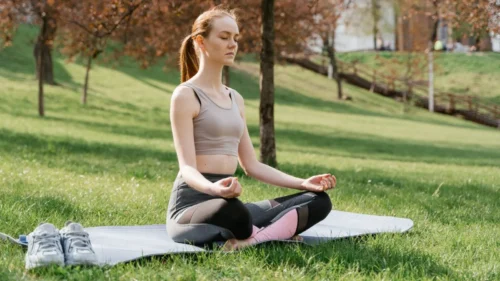
The 10 Best Eco-Friendly Yoga Mats of 2025: An Expert Audit
Affiliate Disclosure
At Benvitalfive, we independently research and recommend products we believe offer real value. Some links in this article are affiliate links, meaning we may earn a small commission if you make a purchase—at no extra cost to you. This helps us maintain and improve our content while remaining editorially independent.
Introduction
The best eco-friendly yoga mat in 2025 is about more than just a soft surface. It is a commitment to biocompatibility and environmental circularity.
Traditional mats often rely on PVC and chemical plasticizers that “off-gas” toxins into your practice space. Modern sustainable mats have bridged the gap, offering elite grip and joint protection without compromising your endocrine health or the planet’s future. In this guide, we audit the top 10 picks based on material science and real-world durability.
In this guide, we review the 10 best eco-friendly yoga mats of 2025 as part of our comprehensive journey into Yoga for Holistic Health.
Explore our Pillar post 5 Pillars of Healthy Living – Holistic Wellness Guide
What Makes a Yoga Mat Eco-Friendly?
Sustainability is no longer a marketing buzzword—it is a measurable metric. We evaluate mats based on:
Polymer Safety: Natural rubber, cork, jute, or certified TPE (free from phthalates and heavy metals).
Mechanical Longevity: A mat that lasts 10 years is often more sustainable than a biodegradable one that lasts six months.
Certifications: Look for OEKO-TEX® Standard 100, FSC®-certified sources, and REACH compliance.
Top 10 Eco-Friendly Yoga Mats
| Rank | Model | Best For | Primary Material |
| 1 | Manduka PRO | Longevity & Studios | High-Density PVC (OEKO-TEX) |
| 2 | Liforme | Alignment & Grip | Natural Rubber + Eco-PU |
| 3 | Jade Harmony | Eco-Purists | 100% Natural Rubber |
| 4 | Gaiam Cork | Hygiene/Antimicrobial | Cork + TPE |
| 5 | Gaiam Foldable | Travel/Portability | Non-toxic PVC |
| 6 | prAna E.C.O. | Beginners/Allergies | TPE (Latex-Free) |
| 7 | Hugger Mugger | Restorative Yoga | Soft-Matrix TPE |
| 8 | Barefoot Yoga | Texture/Outdoors | Jute + Natural Rubber |
| 9 | Suga Mat | Circular Economy | Recycled Wetsuits |
| 10 | B Yoga Everyday | Daily All-Rounder | High-Grip Rubber |
How to Choose the Best Eco-Friendly Yoga Mat
- Thickness:
4–5 mm = balance & stability
6mm+ = joint protection - Grip:
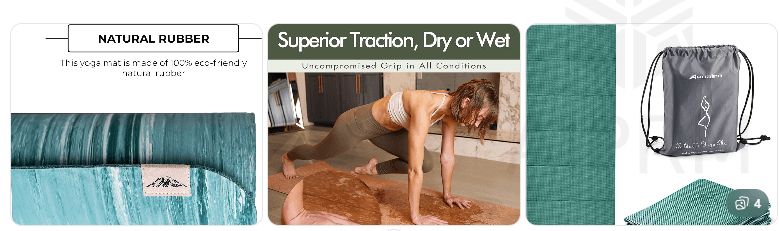
PU & natural rubber = best for sweat
Cork improves grip when wet - Practice Style:
Hot yoga → high grip
Travel → lightweight & foldable
Daily use → durability matters most
The Chemistry of “Eco-Friendly”: 2025 Standards
In 2025, “eco-friendly” is no longer a buzzword—it’s a measurable metric. When evaluating a mat, we analyze three scientific pillars:
Polymer Composition: Is it a renewable elastomer (Natural Rubber) or a persistent synthetic (PVC)?
Mechanical Properties: Does it offer a high Coefficient of Friction ($\mu$) and low Permanent Set (indentation)?
End-of-Life (EoL): Is the material biodegradable, recyclable, or designed for extreme longevity?
Deep Dive: The Science of the Top Picks
1. Best for Longevity: Manduka PRO
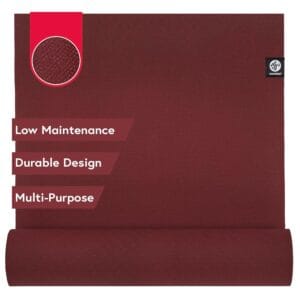
Scientific Verdict: High-density PVC matrix with OEKO-TEX® certification.
Materials Chemistry: Engineered with a phthalate-free, high Shore-hardness PVC. While the polymer is non-biodegradable, its mechanical resilience allows a lifespan of 10–20 years, significantly reducing the “replacement waste cycle.”
Performance: The closed-cell surface prevents liquid absorption, making it the most hygienic option for high-volume studios.
EoL Consideration: PVC does not biodegrade. We recommend this only for “forever” users to offset the manufacturing footprint.
Why It Ranks:
While not biodegradable, the Manduka PRO can last 10–20 years, dramatically reducing landfill waste from frequent replacements.
Best For:
- Teachers & daily practitioners
- Joint support & stability
Pros: Lifetime durability, dense cushioning, hygienic closed-cell surface
Cons: Heavy, PVC-based, requires break-in
2. Best for High-Traction: Liforme Yoga Mat
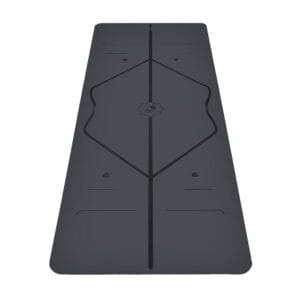
Scientific Verdict: Composite of natural rubber base + eco-Polyurethane (PU) top layer.
Materials Chemistry: The PU top layer is engineered for a high $\mu$ in both dry and humid conditions. It is hydrophilic, meaning it maintains tackiness during heavy sweat.
Performance: Features the AlignForMe® system—laser-etched markers that provide tactile and visual proprioceptive feedback without toxic provide tactile and visual feedback, supporting the Brain health essential for cognitive longevity inks.
EoL Consideration: Hybrid construction. The base is biodegradable rubber, but the PU top layer is not.
Best For:
- Hot yoga & alignment training
Why It Ranks:
Industry-leading grip, alignment markers, and PVC-free construction.
Pros: Outstanding traction, alignment system, non-toxic
Cons: Expensive, heavier, PU is not biodegradable
3. Best Pure Eco-Option: Jade Yoga Harmony
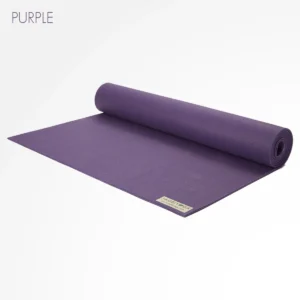
Scientific Verdict: 100% natural cis-1,4-polyisoprene (Rubber) from FSC-certified sources.
Materials Chemistry: Derived from Hevea latex. This mat offers a unique “rebound” effect due to the natural viscoelasticity of rubber.
Performance: Open-cell architecture provides superior grip via micro-roughness.
Safety Note: Contains natural latex proteins; avoid if you have a latex allergy.
EoL Consideration: Highly biodegradable in industrial composting or soil conditions.
Best For:
- Sweaty practices & eco purists
Pros: Exceptional grip, biodegradable rubber, tree-planting program
Cons: Latex allergy risk, requires cleaning
Material: Cork surface + recyclable TPE base
4. Best Antimicrobial Surface: Gaiam Cork Mat
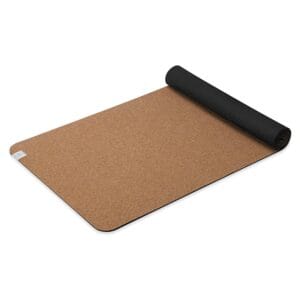
Scientific Verdict: Renewable cork surface bonded to a TPE or recycled rubber backing.
Materials Chemistry: Cork is rich in suberin, a waxy substance that is naturally antimicrobial and hydrophobic.
Performance: Unique “Wet-Grip” phenomenon: traction increases as moisture is introduced to the cork cells.
EoL Consideration: Cork is fully biodegradable; backing materials vary (check for TPE vs. Rubber).
Best For:
- Hot yoga & hygiene-focused yogis
Pros: Antimicrobial, lightweight, renewable cork
Cons: Less cushioning, TPE not biodegradable
5. Best Travel-Friendly: Gaiam Foldable Yoga Mat
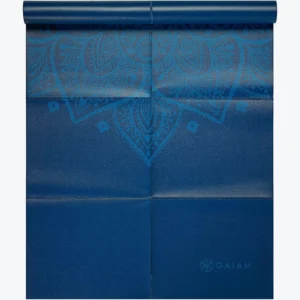
Scientific Verdict:
A lightweight (2 lb), 2 mm PVC travel mat engineered for portability. It features a “sticky” texture for dry grip but offers minimal joint cushioning.
1. Material Chemistry
Composition: Non-toxic PVC (Polyvinyl Chloride).
Safety: Formulated as 6P-Free, meaning it lacks the six most harmful phthalate plasticizers (DEHP, DBP, BBP, DINP, DIDP, and DNOP).
Allergens: 100% Latex-free, making it a safe synthetic alternative for those with rubber allergies.
2. Performance
Mechanical Support: 2mm ultra-thin profile provides high “ground feel” (proprioception) but low impact absorption. Best used on carpet or as a topper for studio mats.
Traction: Features a “sticky” surface texture designed for stable dry grip. However, like most PVC, it becomes hydrophobic (slippery) when wet with sweat.
3. Safety Notes
Thermal Sensitivity: PVC is prone to oxidative degradation; prolonged sun exposure can make the mat brittle or cause the surface to flake.
Off-Gassing: May release a harmless “new plastic” smell initially; dissipate by unrolling in a ventilated area for 24 hours.
4. End-of-Life (EoL)
Biodegradability: Non-biodegradable. PVC persists in landfills indefinitely.
Recyclability: Low. While technically a #3 plastic, it is rarely accepted by municipal recycling programs.
Sustainability Win: Its compact, foldable design (10″ x 12″) encourages long-term travel use, reducing the need for single-use or rental mats.
Best For:
- Travel & on-the-go practice
Pros: Foldable, lightweight, PVC-free
Cons: Creasing over time, thinner feel
6. Best Travel Option: prAna E.C.O.
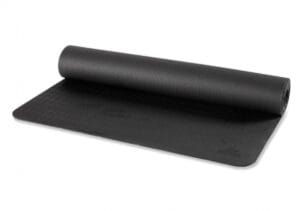
Scientific Verdict: Lightweight Thermoplastic Elastomer (TPE) block copolymer.
Chemistry: PVC-free and latex-free. TPE is chemically inert and UV-resistant.
Performance: Closed-cell structure ensures zero water uptake, making it easy to sanitize while traveling.
Best For:
- Beginners & travel
Pros: Latex-free, lightweight, affordable
Cons: Less grip when wet, moderate durability
7. Best for Restorative: Hugger Mugger Earth Elements
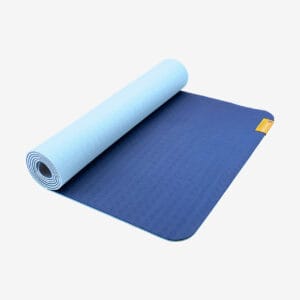
Scientific Verdict: Soft-matrix TPE designed for high energy absorption.
Performance: Optimized for Yin or Restorative yoga where long-duration joint pressure is the primary concern rather than high-friction movement.
Best For:
- Yin & restorative yoga
Pros: Soft cushioning, non-toxic
Cons: Not ideal for hot yoga
8. Best Hybrid Texture: Barefoot Yoga Original Eco
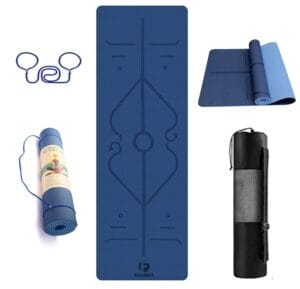
Scientific Verdict: Jute fiber mesh embedded in a natural rubber matrix.
Chemistry: Jute is a lignocellulosic fiber that provides structural reinforcement and moisture wicking.
EoL Consideration: Excellent. Both components are plant-based and biodegradable.
Best For:
- General practice & outdoor use
Pros: Strong grip, durable, chemical-free
Cons: Heavy, rubber smell initially
9. Best Circular Economy Pick: Suga Mat
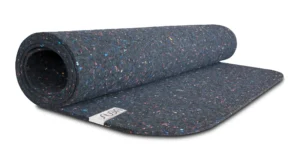
Scientific Verdict: Upcycled Neoprene (Chloroprene Rubber) reclaimed from wetsuits.
The “Eco” Fact: Rather than using virgin materials, Suga diverts non-biodegradable wetsuits from landfills.
Performance: Extremely durable and weather-resistant; the best choice for outdoor or beach practice.
Best For:
- Outdoor & beach yoga
Pros: Diverts waste from landfills, durable
Cons: Limited cushioning, not biodegradable
10. Best Everyday Natural Rubber Mat: B Yoga Everyday Mat
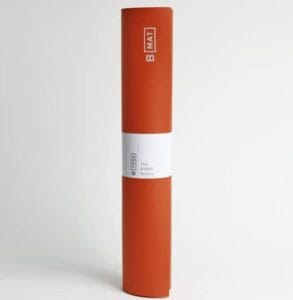
Eco-Credibility Score: A-
Material: Natural rubber
Best For:
- Daily practice across styles
Pros: Strong grip, dense support, durable
Cons: Heavy, premium price
Benefits of Using Sustainable Yoga Mats
Health Benefits
- No PVC or phthalates
- Hypoallergenic options available
- Reduced chemical off-gassing
Environmental Benefits
- Less plastic waste
- Renewable or recycled materials
- Ethical production practices
Long-Term Value
- Better durability
- Fewer replacements
- Lower lifetime environmental impact
How to Choose Based on Science
If you have allergies: Avoid Natural Rubber; choose Manduka PRO (PVC) or prAna (TPE).
If you practice Hot Yoga: Choose Gaiam Cork or Liforme (PU) for moisture-activated grip.
If you prioritize the Planet’s End-of-Life: Choose Jade Harmony or Barefoot Yoga (Jute/Rubber).
Cleaning and Maintaining Your Eco-Mat
Because eco-friendly mats use natural fibers and complex polymers, cleaning them with the wrong chemicals can cause oxidative degradation (for rubber) or cell-wall collapse (for cork). Here is how to maintain your investment based on materials science:
1. Natural Rubber Mats (Jade, B Yoga)
The Science: Natural rubber is a “living” material sensitive to UV light and pH levels.
The “Never”: Avoid vinegar or essential oils. Acetic acid accelerates the breakdown of rubber’s molecular chains, leading to “flaking.”
The “Pro-Tip”: Use a 50/50 mix of water and witch hazel. It’s pH-neutral and cleans without stripping the natural tackiness. Store in a dark place to prevent UV-induced cracking.
2. Cork Mats (Gaiam)
The Science: Cork is antimicrobial due to its suberin content, meaning it mostly cleans itself.
The “Never”: Do not over-saturate. Excessive water can cause the adhesive layer between the cork and the backing to delaminate.
The “Pro-Tip”: Simply wipe with a damp cloth once a week. If you need a deeper clean, use a drop of mild dish soap in a liter of water.
3. Polyurethane (PU) Mats (Liforme)
The Science: PU is hydrophilic (water-loving). It absorbs sweat to provide grip, but it also absorbs skin oils which can clog the “pores” of the mat.
The “Never”: Avoid any oil-based cleaners. They will permanently “grease” the surface and destroy the grip.
The “Pro-Tip”: Use a heavily diluted solution of lemon juice and water. The citric acid helps break down skin oils without damaging the PU coating.
Final Recommendation
For the High-Performance Athlete: Go with the Liforme. The technical grip is unmatched.
For the Earth-Conscious Minimalist: Go with Jade Harmony. It is the most “of the earth” mat on the list.
For the Studio Owner: Go with the Manduka PRO. Its hygiene and longevity make it the most sustainable choice for high-traffic environments.
Conclusion
The best eco-friendly yoga mats of 2025 balance non-toxic materials, durability, and real sustainability—not greenwashing. While no mat is perfect, choosing responsibly made options from natural rubber, cork, or recycled materials significantly reduces both health risks and environmental harm.
Whether you prioritize grip, travel convenience, or longevity, investing in a high-quality sustainable yoga mat supports a healthier practice—and a healthier planet.
Investing in a high-quality, sustainable yoga mat is a vital step in your 5 Pillars of Healthy Living – Holistic Wellness Guide. To continue your growth, explore our latest guide on Book Reading for Mental Clarity
Sources
Manufacturer product page — Manduka PRO (OEKO-TEX & PVC details).
Liforme product & material descriptions (AlignForMe, natural rubber + eco-PU).
Jade Yoga product specs and sustainability claims (natural rubber, FSC/OEKO-TEX claims).
Gaiam cork product listings (cork + TPE backing, antimicrobial claims).

