
Table of Contents
ToggleThe Science of a Balanced Plate: How to Build a Nutritious Meal With Everyday Indian Foods
Author: Dr Poojitha L. Acharya
Designation: Senior Clinical Dietitian | Senior Nutritionist | Metabolic Health and Wellness Coach
Editorial affiliation: Editorial Board Member, BenVitalFive
Introduction: Healthy eating begins with everyday choices.
Healthy eating is not about abandoning traditional foods. It is about understanding how to combine familiar foods in the right variety and proportions.
Balanced Indian diet—nutritious meals do not need expensive ingredients, complicated recipes, or unfamiliar foods. In most Indian households, balanced nutrition can be built using familiar staples such as rice, roti, dal, vegetables, curd, fruits, nuts, eggs, fish and other locally available foods.
Yet, many people associate healthy eating with eating less, avoiding carbohydrates or following restrictive diets. These approaches can create confusion and may make healthy eating unnecessarily difficult.
From a clinical nutrition perspective, a balanced meal is one that provides a suitable combination of energy, protein, fibre, essential fats, vitamins, minerals and fluids. The proportions and food choices should reflect an individual’s age, activity level, health status, preferences and nutritional requirements.
Understanding how different food groups contribute to a meal is a practical first step towards improving everyday nutrition.
1. What does a balanced meal actually mean?
A balanced meal combines nutrients that support the body’s normal functions.
- Carbohydrates: the body’s primary dietary energy source.
- Protein: required for tissue growth and repair, enzymes, hormones, and muscle maintenance.
- Dietary fats: provide energy, support cell structure, and help absorb fat-soluble vitamins.
- Fibre: supports bowel function, contributes to fullness and can improve overall dietary quality.
- Vitamins and minerals: participate in immunity, bone health, blood formation and metabolism.
- Water: supports temperature regulation, digestion, circulation and normal cellular functions.
No single food provides everything the body needs in ideal amounts. Variety across meals and across the day is therefore important. A balanced meal is not defined by one perfect food or a rigid ratio. It is the overall combination, quantity and frequency of foods that contribute to nutritional adequacy.
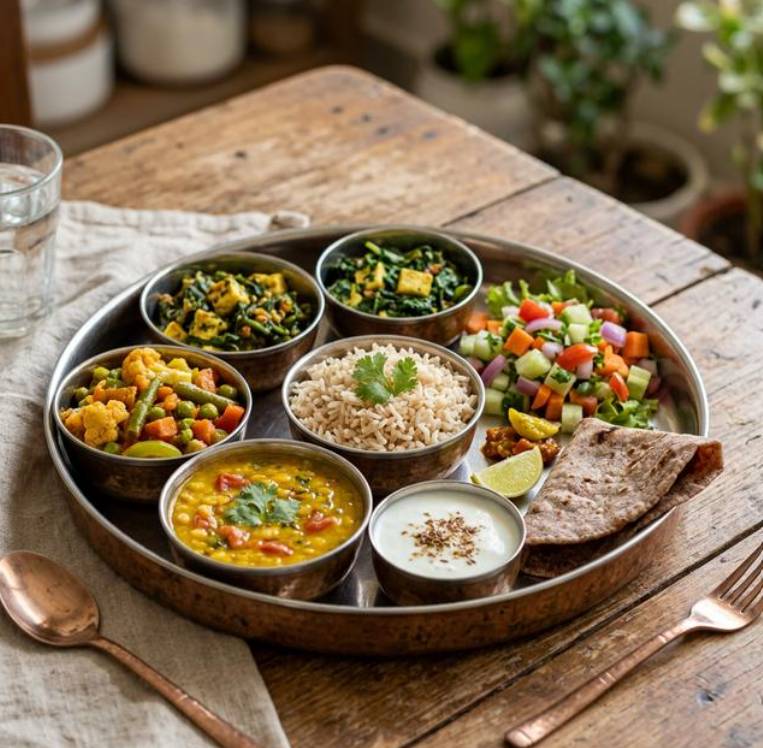
2. Balanced Indian Diet—A practical visual guide to building your plate
For general meal planning, a visual plate can make balanced eating easier to understand. One useful illustrative approach is:
- Approximately half the plate: vegetables, including a variety of cooked and raw options.
- Approximately one-quarter: protein-rich foods such as dal, beans, chickpeas, eggs, fish, chicken, paneer or curd.
- Approximately one-quarter: cereals and other carbohydrate-rich staples such as rice, roti, millet or other grains.
This is a flexible educational guide, not a fixed prescription or an official ICMR–NIN meal ratio. The balanced plate model is a simple visual tool for understanding meal composition. It is not a rigid dietary prescription or an official ICMR–NIN plate ratio. The proportions can be adjusted according to age, energy requirements, physical activity, appetite, health conditions, cultural food preferences and individual nutritional needs. Traditional Indian meals may also combine several food groups in one preparation, such as vegetable sambar, dal khichdi or vegetable pulao. What matters most is achieving dietary variety and nutritional adequacy across the day. It can be adapted according to appetite, energy needs, food availability, cultural preferences and medical requirements.
ICMR–NIN’s Dietary Guidelines for Indians 2024 emphasize dietary diversity and appropriate intake from different food groups across the day. The guidelines should be understood as a broader dietary framework rather than reduced to a single-plate formula.
3. Carbohydrates: Choose quality, variety, and appropriate portions
Carbohydrates are an important source of energy, particularly for the brain and working muscles. They should not be automatically eliminated from a healthy diet.
Common Indian carbohydrate sources include rice (including parboiled and brown rice), whole-wheat roti and other whole-grain preparations, millets such as ragi, jowar and bajra, oats and other cereal grains, idli, dosa, upma, and other traditional preparations. Fruits, pulses and milk also contain carbohydrates while providing other nutrients.
The way carbohydrates affect blood glucose can also depend on food preparation, portion size and the other foods eaten alongside them. Combining rice or other cereal staples with pulses, vegetables and suitable protein sources can contribute to a more balanced meal. Individual glucose responses may still vary.
The nutritional quality of carbohydrate-containing foods varies. Whole grains, pulses, vegetables and whole fruits generally provide more fibre and additional nutrients than highly refined, low-fibre alternatives.
For example, a meal containing rice with dal, vegetable poriyal and curd offers a broader nutrient combination than a meal consisting mainly of a large serving of plain rice.
Clinical distinction: the presence of carbohydrates does not automatically make a food unsuitable for people with diabetes. Total carbohydrate intake, portion size, food quality, medication, physical activity and the individual’s glucose response all matter. People with diabetes should receive individualised advice rather than follow a blanket carbohydrate-elimination rule.
4. Protein: Include a source in your main meals.
Protein is essential for maintaining and repairing body tissues. It also supports muscle maintenance, immune function and the production of enzymes and hormones.
Vegetarian choices include dal and other pulses; chickpeas, rajma and other beans; soy foods, where suitable and preferred; milk, curd and paneer; and nuts and seeds. Non-vegetarian choices include eggs, fish, chicken and other lean meat options.
For example, a vegetarian meal containing rice, sambar, curd and vegetable poriyal can provide a combination of carbohydrates, plant protein, dairy protein, fibre and micronutrients. Other useful combinations include chapati with chana masala or vegetable khichdi with curd.
Combining different plant protein sources across the day can help improve dietary variety and amino acid adequacy. For example, rice with dal, roti with chana or khichdi with curd can contribute to a varied protein intake. Food combinations do not need to be complicated, and every meal does not need to provide a theoretically perfect amino acid profile.
Protein requirements vary with age, body size, activity, pregnancy, lactation, illness and recovery needs. People with kidney disease or certain metabolic conditions may need specifically tailored protein advice. Protein powders and supplements are not automatically necessary; a well-planned diet can meet the protein needs of many people.
5. Vegetables and fruits: Make colour and variety a daily habit
Vegetables and fruits supply dietary fibre, vitamins, minerals and beneficial plant compounds. Different colours often indicate different naturally occurring plant pigments and compounds. Eating a variety is more useful than relying on just one or two familiar choices.
Everyday Indian options include green leafy vegetables such as spinach, amaranth and fenugreek leaves; gourds, beans, carrots, beetroot and pumpkin; cabbage, cauliflower, brinjal and okra; tomatoes and onions; and seasonal fruits such as guava, papaya, oranges, bananas and apples.
Fresh, frozen or appropriately stored vegetables can all contribute to a healthy diet. Cooking methods should preserve palatability and avoid unnecessary excess oil.
Whole fruits are generally preferable to fruit juices because they retain their natural fibre and tend to be more filling. Even unsweetened fruit juice can provide concentrated amounts of naturally occurring sugars and may be easier to consume in larger quantities. Whole fruit is therefore a useful everyday choice for most people.
6. Dietary fats: Focus on type as well as quantity
Dietary fats are necessary for health. They provide energy, support cell membranes and help the body absorb vitamins A, D, E and K.
Sources include groundnut, sesame, mustard, sunflower and other edible oils; nuts such as almonds and walnuts; seeds such as flaxseed, sesame and pumpkin seeds; and fish and other foods containing unsaturated fats.
Unsaturated fats are generally preferred over saturated fats when choosing dietary fat sources. Frequent intake of foods high in saturated fat and industrial trans fat should be limited.
All fats are energy-dense. Even oils considered heart-friendly should be used in appropriate quantities. Use measured amounts of cooking oil, vary suitable sources and avoid repeatedly deep-frying foods.
7. Dairy and other calcium-rich foods
Milk, curd and other dairy products can contribute protein, calcium and other nutrients. For people who consume dairy, plain curd, milk and appropriately selected paneer can be included as part of a varied diet.
Vitamin D also plays an important role in calcium absorption and bone health. Adequate vitamin D status and calcium intake should be considered together as part of overall nutritional health.
People who avoid dairy may obtain calcium from suitable alternatives such as certain green leafy vegetables, calcium-set tofu and fortified foods, depending on availability and dietary requirements.
Calcium needs vary with age and life stage. People with lactose intolerance may tolerate curd or certain dairy products better than milk, although tolerance differs between individuals.
8. Hydration: Do not overlook water.
Water is essential for normal body functions, including circulation, digestion and temperature regulation. Daily fluid requirements vary with body size, physical activity, climate, diet, pregnancy, lactation and health conditions.
In hot and humid climates, including many parts of India, fluid losses may increase with sweating and outdoor activity. Drink water regularly, keep drinking water accessible, increase fluid intake appropriately during heat and physical activity, and include water-rich foods such as fruits and vegetables.
There is no single water target that is appropriate for everyone. People with heart failure, kidney disease or other conditions requiring fluid restriction should follow their treating clinician’s advice.
9. What does a balanced Indian meal look like?
- Simple vegetarian lunch: rice or roti; dal or sambar; vegetable poriyal or sabzi; curd; and a seasonal fruit.
- Protein-rich breakfast: idli or dosa; sambar with a good quantity of pulses and vegetables; plain curd, if suitable; and a serving of fruit.
- Non-vegetarian meal: rice or roti; fish or chicken curry prepared with an appropriate amount of oil; a vegetable side dish; salad or another vegetable preparation; and curd, if desired and tolerated.
- Convenient one-pot meal: vegetable and dal khichdi; curd or another suitable protein accompaniment; and a vegetable side dish or salad.
- Traditional South Indian meal: rice, keerai preparation, sambar or dal, vegetable poriyal and curd.
These are examples, not prescribed menus. Portions should be adjusted according to an individual’s energy and nutritional needs.
10. Common mistakes that make balanced eating difficult
Healthy eating does not depend on imported foods, expensive protein products or fashionable ingredients. Locally available foods such as seasonal vegetables, pulses, groundnuts, millets, curd and traditional preparations can contribute to a nutritious diet.
- Avoiding all carbohydrates: carbohydrates are not inherently unhealthy. Food quality, portions and overall dietary patterns matter.
- Eating vegetables but neglecting protein: vegetables are valuable, but they do not necessarily provide enough protein to meet an individual’s requirements.
- Assuming all millets are automatically healthier in every situation: millets can contribute fibre and micronutrients, but they are still carbohydrate-containing foods. Suitability and portions depend on the overall meal and individual needs.
- Relying on fruit juice instead of whole fruit: whole fruit generally provides more fibre and can be more satiating.
- Using excessive oil because it is labelled healthy: the type of fat matters, but quantity matters too.
- Following restrictive diets without a clinical reason: unnecessary restrictions can reduce dietary variety and make nutritional adequacy harder to achieve.
- Ignoring individual requirements: a meal pattern that works for one person may not suit someone with a medical condition or a different life stage.
11. How to make balanced eating sustainable
- Include a variety of vegetables across the day.
- Add a protein source to main meals.
- Choose whole grains and minimally processed staples regularly.
- Include whole fruits rather than relying mainly on juices.
- Use cooking oils in measured quantities.
- Drink water regularly, adjusting for individual needs.
- Plan meals around familiar, affordable and seasonal foods.
- Avoid treating one meal or one food choice as a measure of overall dietary success.
- Healthy eating becomes easier when it is built around familiar foods, manageable routines and realistic choices rather than strict dietary rules.
Consistency and variety are more useful than trying to achieve a perfect plate at every meal.
Frequently Asked Questions
Do I need to stop eating rice to have a balanced diet?
No. Rice can be part of a balanced diet. The type, quantity, accompanying foods and individual health requirements should guide portion choices.
Can vegetarians meet their protein requirements?
Yes. A varied vegetarian diet containing pulses, beans, dairy or suitable alternatives, nuts and seeds can contribute to protein needs. Total intake and individual requirements should be considered.
Are millets better than rice?
Millets can provide fibre and micronutrients, but no single grain is universally superior. Both can fit into a balanced diet. Variety, preparation, portions and the overall dietary pattern matter.
Is eating fruit at night unhealthy?
There is no general rule that fruit becomes unhealthy at night. It can be included according to appetite, tolerance and individual dietary needs.
Should every meal follow the same plate proportions?
No. A visual plate guide is a teaching tool. Breakfast, snacks and mixed dishes may look different. Nutritional adequacy is assessed across the overall diet, not by forcing every meal into identical proportions.
Does a balanced diet help people with diabetes?
A well-planned dietary pattern can support diabetes management. However, carbohydrate portions, meal timing, medication and glucose responses should be considered individually. Nutrition advice should complement, not replace, prescribed medical treatment.
Can traditional Indian meals provide balanced nutrition?
Yes. Traditional Indian meals can provide a variety of nutrients when they include appropriate portions of cereals or millets, pulses, vegetables, fruits and suitable protein sources. The nutritional quality depends on the ingredients, preparation methods, quantities and overall dietary pattern.
Conclusion: Balance is about the whole dietary pattern
A balanced diet does not require expensive superfoods, strict food rules or the elimination of familiar Indian staples. It begins with variety: cereals and millets, pulses and other protein sources, vegetables, fruits, nuts, seeds, suitable fats and adequate fluids.
The most useful meal is not necessarily the most elaborate one. It is the one that provides appropriate nourishment, fits the person’s needs and can be sustained over time. Healthy eating is not about perfection. It is about making informed, consistent choices that support long-term health.
References
1. Indian Council of Medical Research – National Institute of Nutrition (ICMR–NIN). Dietary Guidelines for Indians 2024. Hyderabad: ICMR–NIN.
Read the official Dietary Guidelines for Indians 2024.
2. ICMR–NIN Expert Group. Nutrient Requirements for Indians: Recommended Dietary Allowances and Estimated Average Requirements. 2020.
Official ICMR–NIN RDA publication information.
3. World Health Organization. Healthy Diet.
WHO – Healthy Diet.
4. World Health Organization. Carbohydrate Intake for Adults and Children: WHO Guideline. 2023.
WHO – Carbohydrate Intake Guideline.
Author’s professional note: This article provides general nutrition education. It does not replace individualised dietary assessment or medical advice.

