
Introduction
Starting a physical exercise routine can feel overwhelming, especially if you’re new to working out or haven’t been active for a while. The good news is, beginning a fitness journey doesn’t have to be complicated. With the right mindset, planning, and simple steps, anyone can start exercising and make it a lasting habit.
In this guide, we’ll cover why physical exercise matters, how to start safely, and practical tips to stick to your routine.
Why Physical Exercise Is Important for Beginners
Physical exercise isn’t just about losing weight or building muscle. It has numerous benefits for your body, mind, and overall health:
- Improves Heart Health: Regular activity strengthens your heart, improves circulation, and reduces the risk of chronic diseases.
- Boosts Mood and Mental Health: Exercise releases endorphins, which reduce stress, anxiety, and depression.
- Increases Energy and Strength: Moving your body regularly builds stamina, flexibility, and muscle strength.
- Supports Weight Management: Even moderate activity helps burn calories and maintain a healthy weight.
- Enhances Sleep Quality: People who exercise often fall asleep faster and enjoy deeper rest.
Understanding these benefits can motivate beginners to start moving, even if it’s just a few minutes a day.
How to Start Physical Exercise as a Beginner
Starting small is key. Here’s a step-by-step approach:
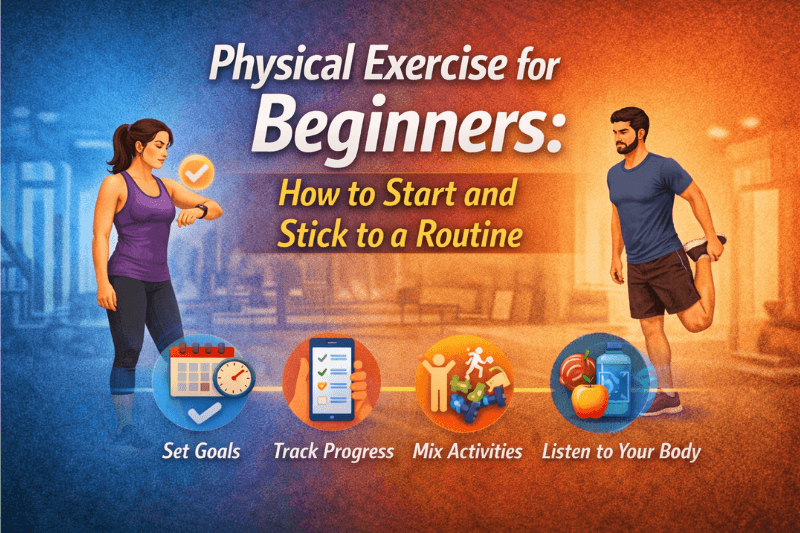
1. Set Clear, Realistic Goals
Before you begin, ask yourself:
- Do I want to improve fitness, lose weight, reduce stress, or build strength?
- How much time can I dedicate per week?
Setting achievable goals ensures you stay motivated without feeling overwhelmed. For example:
“I’ll walk for 20 minutes, 3 times a week for the first month.”
2. Choose Activities You Enjoy
Exercise shouldn’t feel like punishment. Pick activities that feel fun or interesting:
- Walking, jogging, or cycling
- Yoga or stretching routines
- Bodyweight workouts or light strength training
- Dance, Zumba, or online fitness classes
When you enjoy your workouts, you’re more likely to stick with them.
3. Start Slow and Build Gradually
Beginners often make the mistake of pushing too hard too soon, which can lead to injuries. Instead:
- Begin with 10–20 minutes a day
- Include warm-ups and cool-downs
- Gradually increase intensity or duration over time
4. Create a Routine
Consistency is more important than intensity. Schedule your workouts like appointments:
- Morning walks before work
- Evening stretches or yoga
- Lunchtime walks
Adding exercise to your daily routine makes it easier to maintain.
5. Track Your Progress
Tracking helps you stay motivated and see improvements over time. Use:
- A fitness journal or app
- Step counters or smartwatches
- Notes on how you feel after each workout
Celebrating small milestones keeps you engaged.
6. Listen to Your Body
Pay attention to your body’s signals. It’s normal to feel mild soreness when starting, but stop if you experience pain, dizziness, or severe discomfort. Over time, your stamina will increase naturally.
Tips to Stick to Your Exercise Routine
Sticking with exercise can be challenging. These tips make it easier:
- Find a Workout Buddy: Exercising with someone keeps you accountable and makes it more enjoyable.
- Mix It Up: Variety prevents boredom — try alternating between cardio, strength, and flexibility exercises.
- Set Reminders: Use alarms or calendar alerts to remind yourself of workout times.
- Reward Yourself: Treat yourself for meeting goals, like enjoying a healthy snack or relaxing activity.
- Focus on Habit, Not Perfection: Missing a day is okay. The goal is long-term consistency.
Beginner-Friendly Exercise Ideas
Here’s a simple weekly plan for beginners:
| Day | Activity | Duration |
| Monday | Brisk Walk | 20 min |
| Tuesday | Bodyweight Exercises (squats, push-ups) | 15–20 min |
| Wednesday | Yoga or Stretching | 20 min |
| Thursday | Jog or Walk | 20–25 min |
| Friday | Strength Training (light weights or resistance bands) | 15–20 min |
| Saturday | Fun Activity (dance, cycling) | 20–30 min |
| Sunday | Rest or Light Stretching | 10–15 min |
This plan is flexible — adjust based on your fitness level and schedule.
Final Thoughts
Starting a physical exercise routine as a beginner doesn’t have to be intimidating. By setting realistic goals, choosing activities you enjoy, starting slow, and staying consistent, you can make exercise a natural part of your daily life. Remember, consistency beats intensity, and every small step counts toward better health.
Begin today — your body and mind will thank you tomorrow!
FAQs
- How often should beginners exercise each week?
Start with 3–5 days a week and gradually increase based on comfort.
- What’s the best time of day to exercise for beginners?
Any time that fits your schedule consistently is effective, whether morning or evening.
- How long should a beginner workout last?
Aim for 15–30 minutes per session to build habit without overexertion.
- Is it normal to feel sore after starting a new routine?
Mild soreness is normal, but sharp pain means you should rest and adjust.
- How can beginners stay motivated to keep exercising?
Set small goals, track progress, and choose activities you genuinely enjoy.

