
Affiliate Disclaimer
This post contains affiliate links. When you buy through these links, I may earn a small commission at no extra cost to you.
1. Introduction
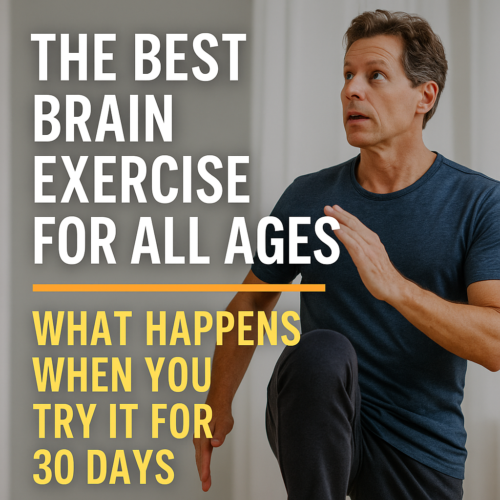
The Best 3 Brain Exercises for All Ages—What Happens When You Try It for 30 Days?
Have you ever wished for a simple habit that could boost your memory, sharpen your focus, and clear your mind—no matter your age?
Good news—it exists! You don’t need tools, apps, or expensive programs to do it. It’s a gentle mind–body practice anyone can start today, whether you’re 7 or 70.
This exercise strengthens the brain just like walking strengthens the heart. When you do it for 30 days, you will have better concentration, calmer emotions, clearer thinking, and more confident decisions.
It shows how small daily actions can create big positive changes in the brain.
In this guide, you’ll discover what this exercise is, how it works for all age groups, and why teachers, doctors, and wellness experts recommend it as a lifelong brain-boosting habit.
Ready to explore how your mind can change in 30 days? Let’s begin.
This method includes Super Brain Yoga, cross-crawl movements, and mindful breathing with visualization.
Together, they improve memory, focus, emotional balance, coordination, and overall brain power.
It doesn’t matter if you’re a student, a homemaker, or an employee—a simple brain exercise routine keeps your mind alert, flexible, and ready for success now and in the future.
2. Why Brain Exercises Matter at Every Age
Brain exercises are essential for maintaining cognitive strength throughout life. The human brain continues to grow, adapt, and form new neural connections at any age—a phenomenon known as neuroplasticity. This means that with the proper stimulation, your brain can stay sharp, flexible, and resilient well into your senior years.
Scientific research shows that regular mental and physical brain exercises can:
- Increase blood flow and oxygen supply to the brain
- Strengthen existing neural pathways while creating new ones
- Improve memory retention and attention span
- Slow down age-related cognitive decline
- Enhance problem-solving, creativity, and decision-making
- Reduce stress by balancing the nervous system
- Support emotional stability and overall well-being
Brain exercises are essential for all ages to stay mentally active. The regular practicing of brain exercises improves focus, memory, and mental clarity for people of all ages.
3. What Makes These the “Best” Brain Exercises?
These three combined exercises meet all scientific criteria for boosting cognitive function:
- Engage both hemispheres of the brain
- Improve mind–body coordination
- Increase oxygen supply and blood circulation
- Stimulate the prefrontal cortex (focus + decision-making)
- Enhance memory systems (hippocampus)
- Reduce cortisol and promote mental clarity
They are also safe, simple, and require no equipment—making them perfect for all ages.
4. The 3 Best Brain Exercises for all ages
4.1 The Super Brain Yoga
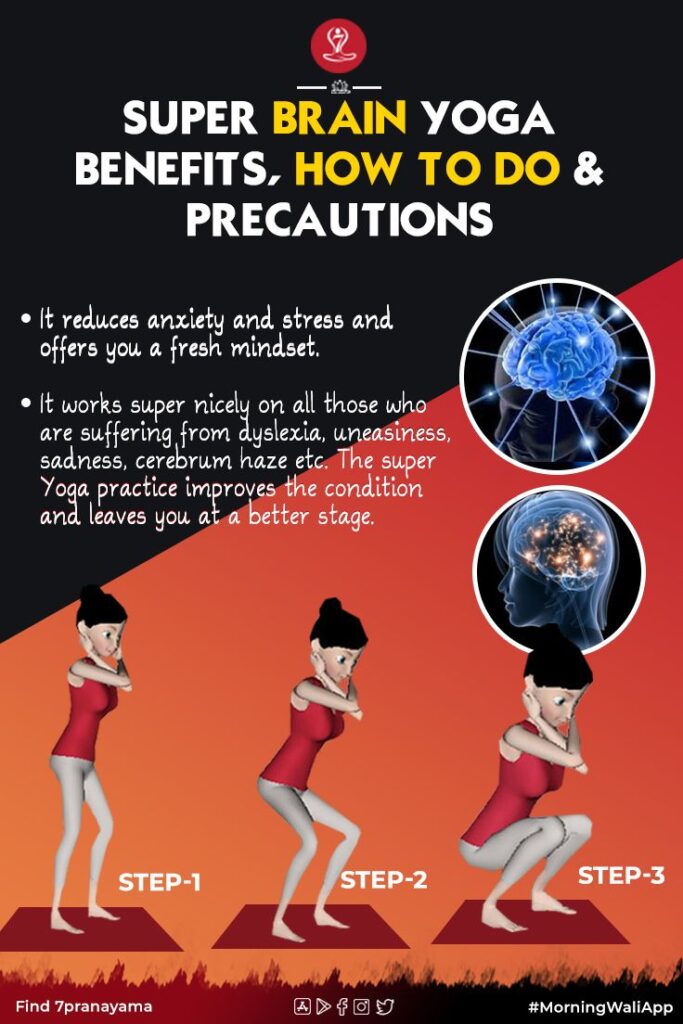
Super Brain Yoga is a simple squat exercise that helps improve brain function and overall well-being. It works by activating energy points on the earlobes and coordinating both sides of the brain.
A study on super brain yoga was conducted on 40 healthy boys aged 14–16 years to test its effects on attention. Researchers used the d2 test to measure working memory and focus. After one month of daily practice, the students showed a clear improvement in attention span. The results were highly significant, with a p-value of <0.001.
Super Brain Yoga is an effective and easy method for students to improve concentration and support better academic performance.
Scientific Benefits
Studies suggest cross-body movements activate both brain hemispheres, strengthening:
- Memory
- Focus
- Emotional balance
- Learning speed
How to Do It
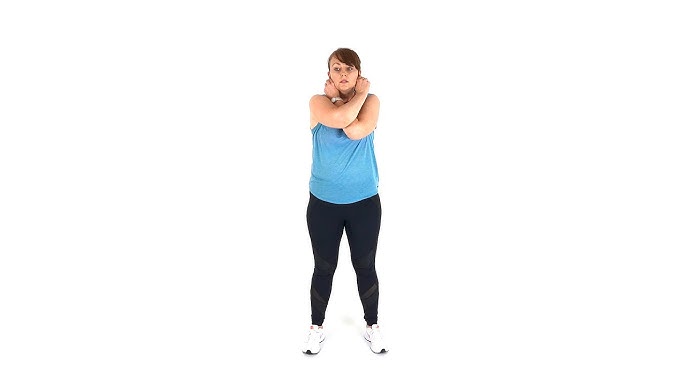
- Stand straight.
- Hold the left earlobe with the right hand and the right earlobe with the left hand.
- Inhale as you squat down.
- Exhale as you stand up.
- Repeat 14–21 times daily.
Why it Works With All Ages
Children: Increases attention and learning capabilities
Adults: improving focus and productivity
Seniors: Improve balance and memory retention
4.2 Cross Crawl Exercise:
What it means
A cross-crawl movement is a gentle exercise where the opposite sides of the body work together. Examples include crawling, walking, and swimming, where the right arm moves with the left leg, and then the left arm moves with the right leg.
Cross-crawl activities involve crossing the body’s midline—such as touching your left knee with your right hand. These movements help link the right and left sides of the brain.
This connection is vital because it improves the flow of signals and information between both hemispheres. Cross-crawl exercises support physical coordination and mental skills like reading, language learning, and hand-eye control.
Science-Based Benefits of Cross-Crawl Exercise.
Crawl exercises have numerous scientifically documented advantages over standard physical exercises. Pair with Nature walks for improving information flow between brain hemispheres by engaging the corpus callosum. Numerous studies demonstrate improvements in areas like memory and attention span as a result.
Scientific Benefits of Cross-Crawl Exercise
Cross-crawl improves the flow of information between the brain’s hemispheres via the corpus callosum. Research shows improvements in:
- Enhanced Brain Function and Coordination:
Cross crawls, which involve moving opposite arms and legs (like a crawling motion), help both sides of the brain work together. This interaction can improve overall brain function and coordination in physical movements.
2. Strengthened Core, Better Posture, and Toned Body:
Engaging in cross crawls can strengthen the muscles in your core (the area around your abdomen and back). A strong core helps improve your posture and can also lead to a more toned appearance in your body.
3. Improved Body Awareness:
Doing cross crawls can enhance your awareness of your body and how it moves. This means you can become more attuned to your physical capabilities and limitations.
4. Increased Flexibility:
Activities like cross crawls can promote greater flexibility in your muscles and joints, making it easier to move and perform various physical tasks.
Overall, these benefits contribute to better overall physical and mental health.
How to Do It
- Stand tall.
- Lift right knee and touch it with your left elbow.
- Switch sides.
- Continue for 1–2 minutes.
Perfect for Everyone
Kids love it, adults can do it at work, and seniors find it gentle yet effective.
4.3 Mindful Breathing + Visualization
What Is Relaxation, Mindfulness, and Visualization (RMV)? An exercise designed to relax the nervous system while increasing focus.
Scientific Benefits
Studies of neuroscience have proven the benefits of mindfulness practice for health.
- Increases grey matter in the hippocampus
- Strengthens the prefrontal cortex
- Reduces stress hormone cortisol
- Improves attention span
- Enhances emotional control
How to Do It
- Sit comfortably.
- Inhale for 4 seconds, exhale for 6 seconds.
- Visualize a calm lake, a rising sun, or your goals.
- Practice for 2–5 minutes daily.
5. Additional Effective Brain Exercises
Memory Boosters
- Visualization
- Memory palace
- Daily recall challenge
Focus Enhancers
- Counting backward
- Single-tasking
- Pomodoro micro-sprints
Creativity Builders
- Mind mapping
- Free writing
- Divergent thinking prompts
6. Best Brain Exercises by Age Group
For Children
- Cross-crawl
- Memory cards
- Creative drawing
- Super Brain Yoga (daily practice improves attention)
For Adults
- Learning a new skill
- Strategic games (chess, Sudoku)
- Mindful breathing for stress & clarity
For Seniors
Gentle cross-crawl
Reading + recollection
Social interaction exercises
Visualization practice
7. Best Accessories to Enhance Brain Exercise
- Yoga Mat (for Super Brain Yoga & breathing)
- Fitness Tracker (track heart rate and daily routine)
- Timer/Meditation App (Headspace, Calm, Insight Timer)
- Brain Training Apps (Lumosity, Elevate, Peak)
- Journal (for memory recall and morning reflection)
9. Brain-Boosting Foods for Cognitive Power
- Walnuts—rich in DHA for memory
- Blueberries—antioxidant brain protectors
- Spinach—vitamin K for cognitive health
- Pumpkin seeds – magnesium + zinc
- Dark chocolate—improves blood flow
- Avocado—healthy fats for brain signal transmission
Conclusion
The best brain exercise for all ages to stay sharp is a balanced combination of Super Brain Yoga, cross crawl movements, and mindful breathing with visualization. These exercises stimulate both brain hemispheres, improve memory and focus, reduce stress, and enhance overall mental performance. With just 10 minutes a day, anyone—child, adult, or senior—can build a sharper, stronger, healthier brain.
FAQ
1: What is the best brain exercise to stay mentally sharp?
The best brain exercise combines Super Brain Yoga, cross crawl movements, and mindful breathing. This trio activates both brain hemispheres, enhances neuroplasticity, boosts memory, and improves focus for all age groups.
2: How long should I practice brain exercises each day?
Just 10 minutes daily is enough to strengthen neural pathways, improve recall, and boost attention. Consistency matters more than duration.
3: Are brain exercises helpful for seniors?
Yes. Seniors benefit greatly as these exercises improve balance, memory retention, and cognitive clarity while reducing stress and slowing age-related decline.
4: Can children do Super Brain Yoga and Cross Crawl?
Absolutely. These exercises help improve focus, academic performance, coordination, and emotional stability in children.
5: Do I need any equipment for brain exercises?
No equipment is required. A yoga mat or fitness tracker may help track your routine, but the exercises can be done anytime, anywhere.

