

Every great wellness journey begins with one small step.

Have you ever promised yourself that you would start living a healthier life on Monday, next month, or as soon as your schedule clears up? If so, you’re not alone. Many people begin their health and wellness journey with enthusiasm, only to lose momentum when life becomes overwhelming.
The good news is that lasting wellness isn’t built through perfection—it’s built through small, consistent choices made every day.
A true health and wellness journey is not about following the latest diet trend, spending hours in the gym, or chasing unrealistic fitness goals. Instead, it is about creating a balanced lifestyle that supports your physical health, mental clarity, emotional resilience, and inner peace. Every healthy meal, every mindful breath, every walk around your neighborhood, and every good night’s sleep is a step toward becoming the healthiest version of yourself.
The beauty of this journey is that it looks different for everyone. Your path will be shaped by your age, lifestyle, personal goals, and daily responsibilities. Whether you want to improve your energy, reduce stress, sleep better, strengthen your body, or simply feel happier each day, the principles of holistic wellness remain the same.
Research consistently shows that healthy lifestyle habits have a profound impact on long-term health. According to the World Health Organization (WHO), regular physical activity, balanced nutrition, adequate sleep, stress management, and avoiding harmful habits significantly reduce the risk of chronic diseases while improving overall quality of life. Similarly, the Centers for Disease Control and Prevention (CDC) emphasizes that healthy daily habits not only help prevent illness but also support better mental health, stronger immunity, and greater longevity.
Throughout this guide, you’ll discover practical, science-backed strategies to help you build healthy habits that are realistic, sustainable, and enjoyable. Rather than making drastic changes overnight, you’ll learn how small improvements can create remarkable results over time.
Remember, every lasting transformation begins with one simple decision—to start today.
What Is a Health and Wellness Journey?
A health and wellness journey is the ongoing process of improving your overall well-being through intentional daily choices that benefit your body, mind, and spirit. Unlike a short-term fitness program or restrictive diet, a wellness journey is a lifelong commitment to living with greater balance, purpose, and vitality.
Wellness goes far beyond simply being free from illness. It involves making choices that help you thrive physically, mentally, emotionally, socially, and spiritually. As your life changes, your wellness journey evolves alongside it, adapting to new goals, challenges, and opportunities.
A balanced wellness lifestyle is built on several interconnected habits, including:
Eating nutritious, whole foods
Staying physically active through enjoyable movement
Practicing mindfulness and stress management
Getting restorative sleep each night
Building meaningful relationships
Caring for your emotional well-being
Making time for personal growth and self-care
Rather than striving for perfection, focus on consistency. Small daily improvements—such as taking a short walk, preparing a healthy meal, practicing meditation, or reading an inspiring book—accumulate over time and lead to significant improvements in health and happiness.
Experts from the National Institutes of Health (NIH) note that sustainable lifestyle habits are far more effective than temporary, extreme changes. Consistency creates lasting results because healthy behaviors gradually become part of your everyday routine.
Think of your wellness journey as planting a tree. You don’t see dramatic growth overnight, but with regular care, patience, and nourishment, it grows stronger every season. Your health develops in exactly the same way.
The Eight Dimensions of Wellness
True wellness is multidimensional. Improving one area often strengthens the others, creating a positive cycle that supports long-term health and happiness.
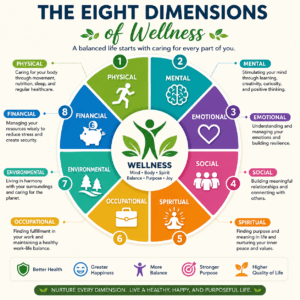
1. Physical Wellness
Physical wellness involves caring for your body through regular movement, balanced nutrition, hydration, quality sleep, and preventive healthcare. Activities such as walking, yoga, strength training, and stretching improve cardiovascular health, muscle strength, flexibility, and overall energy.
Learn more about optimizing your physical body in our guides: Walking Is the Most Underrated Medicine, The Transformative Power of Yoga for Physical and Mental Wellness, and How Much Water Should You Drink Daily?
2. Mental Wellness
Mental wellness refers to maintaining a healthy, focused, and resilient mind. Activities like reading, lifelong learning, meditation, and creative problem-solving help sharpen memory, improve concentration, and reduce mental fatigue.
Explore the science of a sharp mind: How Reading Improves Brain Health and The Science of Mindfulness and Brain Health.
3. Emotional Wellness
Emotional wellness means understanding, expressing, and managing your emotions in healthy ways. It includes developing resilience, practicing gratitude, managing stress, and responding calmly to life’s challenges rather than reacting impulsively. Simple habits such as journaling, mindful breathing, and self-reflection can significantly improve emotional balance.
4. Social Wellness
Humans are naturally social beings. Building supportive relationships with family, friends, neighbors, and communities enhances happiness and reduces feelings of loneliness. Even small acts of kindness and meaningful conversations contribute to better mental and emotional health. Research has shown that strong social connections are associated with longer life expectancy and improved overall well-being.
5. Spiritual Wellness
Spiritual wellness is about finding purpose, meaning, and inner peace. It does not necessarily require religious practice. Many people develop spiritual wellness through meditation, prayer, gratitude, spending time in nature, or serving others. A clear sense of purpose often strengthens resilience during life’s challenges and promotes lasting inner contentment.
6. Occupational Wellness
Feeling fulfilled in your work or daily responsibilities contributes greatly to overall wellness. Occupational wellness involves maintaining a healthy work-life balance, managing stress effectively, and pursuing meaningful goals that align with your values.
7. Environmental Wellness
Your surroundings influence your physical and mental health more than you may realize. Clean air, organized living spaces, natural light, green environments, and reduced exposure to pollution all contribute to better wellness. Even spending twenty minutes outdoors each day can improve mood and reduce stress.
8. Financial Wellness
Financial wellness involves managing money wisely to reduce unnecessary stress and create greater security. Budgeting, saving consistently, and avoiding excessive debt allow you to focus more on healthy living rather than financial worries.
Why These Eight Dimensions Matter
Imagine wellness as the spokes of a wheel. If one spoke becomes weak, the wheel cannot roll smoothly. Similarly, focusing only on exercise while neglecting sleep, emotional health, relationships, or stress management creates imbalance. True health comes from nurturing all dimensions together. You don’t need to perfect every area immediately; instead, aim for gradual, consistent improvement across each aspect of your life.
Strengthen Your Mind and Body Through Daily Wellness Practices
One of the greatest misconceptions about a health and wellness journey is that physical health and mental health exist separately. In reality, they are deeply connected. When your body feels strong and energized, your mind often becomes clearer and more resilient. Likewise, when your mind is calm and focused, you’re more likely to make healthy choices throughout the day.
This powerful connection is why experts recommend adopting mind-body practices that nurture both physical fitness and emotional well-being. According to the World Health Organization (WHO), regular physical activity, stress reduction, and healthy daily habits are among the most effective ways to improve overall well-being and reduce the risk of chronic diseases. Rather than treating exercise and mental health separately, consider them two parts of the same wellness journey.
Practice Yoga for Strength, Flexibility, and Inner Calm
Yoga has been practiced for thousands of years, yet modern science continues to discover new benefits for both physical and mental health. Unlike many forms of exercise that focus only on strength or endurance, yoga combines movement, breathing, balance, and mindfulness into one holistic practice.
Regular yoga practice can help:
Improve flexibility and joint mobility
Build muscle strength and endurance
Enhance posture and balance
Support heart health through gentle physical activity
Reduce stress and anxiety
Improve sleep quality
Increase body awareness and mindfulness
Research supported by the National Center for Complementary and Integrative Health (NCCIH) suggests that yoga may help relieve stress, improve sleep, reduce chronic pain, and support overall mental well-being when practiced consistently.
One of yoga’s greatest advantages is its accessibility. You don’t need expensive equipment or advanced flexibility to begin. Even practicing simple stretches for 15 to 20 minutes each day can improve mobility, reduce muscle tension, and boost energy levels. If you’re just beginning, start slowly and focus on learning proper breathing techniques before attempting more advanced poses.
To dive deeper, read our complete guide on The Transformative Power of Yoga for Physical and Mental Wellness to learn how yoga supports every stage of your wellness journey. For readers seeking greater strength and flexibility, you can also explore our beginner yoga routines, guides on functional fitness, and recommended yoga accessories that support safe practice.
Meditation: Training the Mind for Better Health
Just as exercise strengthens your muscles, meditation strengthens your mind. Meditation teaches you to observe your thoughts without becoming overwhelmed by them. Over time, this simple practice improves concentration, emotional regulation, patience, and resilience.
Modern neuroscience has shown that regular meditation can positively influence areas of the brain involved in learning, memory, emotional control, and decision-making. The National Institutes of Health (NIH) recognizes mindfulness meditation as an effective practice for reducing stress, improving emotional well-being, and supporting overall mental health.
Benefits of regular meditation include:
Reduced stress levels and lower anxiety
Improved emotional balance and self-awareness
Better concentration and memory
Improved sleep quality
Greater resilience during difficult situations
If you’ve never meditated before, don’t worry about clearing your mind completely. Instead, simply focus on your breathing for five to ten minutes. Whenever your attention wanders, gently bring it back to your breath. Like any healthy habit, consistency is far more important than perfection.
Learn more about these neurological shifts in The Science of Mindfulness and Brain Health and How Meditation Changes Your Brain, where we explore the fascinating neuroscience behind mindfulness practice.
Breathe Better, Feel Better
Breathing is something we do automatically, yet most people rarely pay attention to how they breathe. During stressful situations, breathing often becomes rapid and shallow, activating the body’s stress response. Conscious breathing slows the heart rate, relaxes muscles, and helps calm the nervous system.
Simple breathing techniques include:
Deep diaphragmatic breathing
Box breathing (4-4-4-4)
Alternate nostril breathing
Slow nasal breathing
Just five minutes of mindful breathing each day can improve relaxation, sharpen focus, and prepare your body for meditation or sleep. Many yoga traditions begin with breath awareness because breathing connects the mind and body more effectively than almost any other practice.
Move Your Body With Purpose
Movement is one of the most powerful forms of preventive medicine. Unfortunately, modern lifestyles often involve long hours of sitting, which can contribute to poor posture, reduced mobility, weight gain, and increased health risks.
The Centers for Disease Control and Prevention (CDC) recommends that adults engage in regular physical activity every week to improve heart health, strengthen muscles and bones, and reduce the risk of chronic illnesses. Purposeful movement doesn’t require intense workouts or expensive gym memberships. Instead, choose activities you genuinely enjoy, such as:
Walking or cycling
Yoga or stretching
Swimming or dancing
Gardening or light strength training
The best exercise is the one you will continue doing consistently. Remember that every movement counts. Taking the stairs, standing while working, stretching between meetings, or walking after dinner all contribute to better long-term health.
Walking: One of Nature’s Best Medicines
If there were a pill that offered the benefits of walking, it would likely become one of the most prescribed medicines in the world. Walking is simple, free, low-impact, and suitable for people of almost every age.
Regular walking can:
Improve cardiovascular health and circulation
Strengthen muscles and bones
Support healthy weight management and digestion
Reduce blood pressure
Increase energy and improve mood
Reduce symptoms of anxiety and depression
The American Heart Association notes that regular walking supports heart health and contributes to a healthier lifestyle. Walking outdoors offers additional benefits; spending time in parks, forests, or green spaces has been associated with lower stress levels, improved mood, and greater mental clarity. Even a brisk 20- to 30-minute walk each day can make a meaningful difference to your overall health.
Continue reading Walking Is the Most Underrated Medicine, The 6-6-6 Walking Method, and The Benefits of Walking in Nature to discover practical ways to make walking a seamless daily habit.
Build Consistency Instead of Chasing Perfection
Many wellness journeys fail because people try to change everything at once. They start a strict diet, an intense workout plan, and a demanding schedule simultaneously. Within a few weeks, exhaustion replaces motivation. A healthier approach is to build one habit at a time:
Week 1: Walk for 15–20 minutes daily.
Week 2: Add five minutes of stretching.
Week 3: Practice ten minutes of meditation.
Week 4: Continue these habits while gradually improving your nutrition.
Small improvements may seem insignificant in the beginning, but they create remarkable results when repeated consistently over months and years. As author James Clear explains in Atomic Habits, lasting success comes from making small, consistent improvements rather than making dramatic changes that are difficult to maintain.
Quick Wellness Action Plan
Before moving to the next section, ask yourself these simple questions:
Did I move my body today?
Did I spend a few minutes being fully present?
Did I take time to breathe deeply?
Did I stretch after sitting for long periods?
Did I spend some time outdoors?
If you answered “yes” to even one of these questions, you’ve already taken meaningful steps on your health and wellness journey.
Nourish Your Body: Balanced Nutrition, Hydration, Sleep, and Daily Healthy Habits
Your body is like a high-performance engine—it performs best when it receives the right fuel, enough water, adequate rest, and consistent care. While exercise and mindfulness are essential, they cannot compensate for poor nutrition, chronic dehydration, or insufficient sleep.
True wellness comes from making daily choices that nourish your body from the inside out. Instead of chasing fad diets or miracle supplements, focus on building simple, sustainable habits that provide long-term health benefits.
According to the World Health Organization (WHO), a healthy diet combined with regular physical activity is one of the most effective ways to prevent chronic diseases such as heart disease, diabetes, obesity, and certain cancers. Likewise, the Harvard T.H. Chan School of Public Health emphasizes that long-term healthy eating patterns—not short-term diets—are the foundation of lifelong wellness.
Fuel Your Body With Balanced Nutrition
Every meal is an opportunity to nourish your body and support your health. The foods you choose influence your energy, mood, concentration, digestion, immune function, and overall vitality. Rather than asking, “How can I eat less?” ask, “How can I nourish my body better?“
A balanced diet includes a variety of nutrient-rich foods that work together to keep your body functioning at its best.
Build Your Plate Around Whole Foods
Aim to include:
Plenty of colorful vegetables and fresh fruits
Whole grains such as oats, brown rice, and millets
Lean proteins including fish, poultry, eggs, beans, and lentils
Healthy fats from nuts, seeds, avocados, and olive oil
Low-fat dairy or calcium-rich alternatives when appropriate
These foods provide essential vitamins, minerals, antioxidants, fiber, and healthy fats that support every system in your body.
Whenever possible, reduce your intake of highly processed foods, sugary drinks, and excessive amounts of refined carbohydrates. While occasional treats are part of a balanced lifestyle, making whole foods the foundation of your diet helps maintain steady energy and reduces the risk of chronic illness. Read 10 Science-Backed Eating Habits for Long-Term Wellness to discover practical nutrition strategies you can easily incorporate into your daily life.
Eat Mindfully, Not Mindlessly
Healthy eating is not only about what you eat but also how you eat. Many people consume meals while scrolling through their phones, watching television, or working at their desks. This distracted eating often leads to overeating and reduced enjoyment of food.
Mindful eating encourages you to:
Eat slowly and chew your food thoroughly.
Appreciate flavors and textures.
Stop eating when comfortably satisfied.
Listen to your body’s natural hunger and fullness signals.
By becoming more aware of your eating habits, you’ll naturally make healthier food choices without feeling deprived.
Start Your Morning With a Healthy Breakfast
Breakfast truly can set the tone for your entire day. After several hours of sleep, your body needs nourishment to restore energy levels and support brain function. A balanced breakfast helps stabilize blood sugar, improve concentration, and reduce unhealthy snacking later in the day.
Consider including:
Oatmeal topped with fruit and nuts
Whole-grain toast with eggs or a vegetable omelet
Greek yogurt with berries
Smoothies made with leafy greens, fruit, and protein-rich ingredients
These meals provide a combination of complex carbohydrates, protein, healthy fats, and fiber to keep you energized throughout the morning. For more morning inspiration, browse our collections of healthy breakfast recipes, high-fiber breakfast ideas, and general healthy eating articles.
Hydration: The Simplest Wellness Habit You Can Build
Water is essential for every cell in your body, yet hydration is often overlooked when people think about health and wellness. Your body depends on water to regulate body temperature, transport nutrients, aid digestion, lubricate joints, support brain function, maintain healthy skin, and remove waste products. Even mild dehydration can affect concentration, mood, and physical performance.
Although individual water needs vary depending on age, activity level, climate, and overall health, making water your primary beverage is one of the easiest ways to support long-term wellness.
Practical hydration tips include:
Drink a glass of water shortly after waking.
Carry a reusable water bottle throughout the day.
Eat water-rich foods such as cucumbers, watermelon, oranges, and tomatoes.
Increase fluid intake during hot weather or after exercise.
Learn more in How Much Water Should You Drink Daily?, where we explore hydration needs, common myths, and practical tips for staying well hydrated.
Sleep and Recovery: The Missing Pillar of Wellness
Many people focus on eating healthier and exercising more but underestimate the importance of sleep. In reality, restorative sleep is one of the most powerful tools for maintaining good health. While you sleep, your body works tirelessly behind the scenes to repair tissues, strengthen the immune system, regulate hormones, consolidate memories, and restore both physical and mental energy.
The Centers for Disease Control and Prevention (CDC) states that adults who regularly get enough quality sleep have a lower risk of chronic diseases and enjoy better overall physical and mental health. Poor sleep, on the other hand, has been linked to:
Reduced concentration and mood changes
Weakened immunity and increased stress
Weight gain and higher risk of heart disease or type 2 diabetes
Quality sleep is not a luxury—it is a biological necessity.
Healthy Sleep Habits
You can improve your sleep naturally by following a few simple practices:
Go to bed and wake up at the same time every day.
Reduce screen time at least one hour before bedtime.
Keep your bedroom cool, dark, and quiet.
Avoid heavy meals and excessive caffeine late in the evening.
Develop a relaxing bedtime routine, such as reading, gentle stretching, or meditation.
Small improvements in sleep quality often lead to noticeable improvements in mood, energy, focus, and overall well-being. To build your perfect evening wind-down routine, connect to our articles on the Best Herbal Teas for Better Sleep, How to Sleep Better Naturally, and Meditation for Relaxation and Better Sleep.
Recovery Is Part of Progress
Many people believe that doing more always produces better results. However, your body grows stronger during recovery—not during activity itself. Whether you practice yoga, walk daily, strength train, or simply lead a busy lifestyle, your body needs time to recover.
Healthy recovery includes rest days between intense workouts, gentle stretching, deep breathing exercises, meditation, adequate sleep, balanced nutrition, and proper hydration. Ignoring recovery can lead to fatigue, reduced performance, and burnout. Listening to your body and allowing it time to recharge is an important part of sustainable wellness.
Build Healthy Daily Habits That Last
Extraordinary health is built through ordinary daily actions. You don’t need to overhaul your life overnight. Instead, focus on creating small routines that become automatic over time.
Consider building habits such as:
Drinking water immediately after waking and eating a balanced breakfast.
Walking for at least 20–30 minutes each day.
Practicing five to ten minutes of mindfulness.
Preparing nutritious meals at home and stretching after long periods of sitting.
Going to bed at a consistent time and reading a few pages of an inspiring book before sleep.
These seemingly simple actions, repeated consistently, become the foundation of lifelong wellness. As your confidence grows, you’ll naturally add more healthy habits without feeling overwhelmed.
Create a Healthy Morning Routine
How you begin your morning often influences the rest of your day. Instead of reaching for your phone immediately after waking, consider creating a morning routine that supports both physical and mental well-being.
| Time Allotment | Activity | Wellness Focus |
| 5 minutes | Drink a glass of water & practice gratitude | Hydration & Positive Mindset |
| 5 minutes | Gentle stretching or yoga | Joint Mobility & Circulation |
| 10 minutes | Meditation or deep breathing | Nervous System Regulation |
| 10 minutes | Enjoy a nutritious breakfast | Sustained Energy & Metabolism |
This simple 30-minute routine helps you start the day feeling calm, energized, and focused.
Quick Reflection
Before moving to the next section, ask yourself:
Did I eat foods that nourished my body today?
Did I drink enough water?
Am I giving my body enough time to recover?
Is my bedtime routine helping me sleep well?
Which one healthy habit can I strengthen tomorrow?
Nurture Your Inner Well-Being: Emotional, Social, and Spiritual Wellness
A truly successful health and wellness journey extends far beyond healthy eating and regular exercise. While caring for your physical health is essential, lasting well-being also depends on how you manage your emotions, build meaningful relationships, find purpose in life, and respond to daily challenges.
Think of wellness as a tree. Good nutrition and exercise strengthen the roots and trunk, but emotional resilience, supportive relationships, spiritual purpose, and effective stress management are the branches that help you flourish through every season of life.
According to the World Health Organization (WHO), health is “a state of complete physical, mental, and social well-being, and not merely the absence of disease.” This holistic definition reminds us that genuine wellness involves every aspect of our lives.
Emotional Wellness: Learning to Understand and Manage Your Emotions
Emotional wellness is the ability to recognize, express, and manage your feelings in healthy ways. It doesn’t mean feeling happy all the time. Instead, it means developing the resilience to cope with life’s ups and downs while maintaining a positive outlook.
Everyone experiences stress, disappointment, fear, and frustration. The difference lies in how we respond to these emotions. Emotionally healthy people tend to recognize their emotions without judgment, express feelings respectfully, learn from setbacks, practice gratitude, and ask for support when needed.
One of the simplest ways to strengthen emotional wellness is through daily reflection. Keeping a journal, writing down three things you’re grateful for, or spending a few quiet minutes reflecting on your day can improve self-awareness and emotional balance. Research published by the American Psychological Association (APA) shows that developing healthy coping strategies and emotional resilience contributes to improved mental well-being and reduced stress.
Discover practical ways to improve your emotional resilience by checking out The Benefits of Journaling for Mental Wellness and reviewing The Science of Mindfulness and Brain Health.
Social Wellness: The Healing Power of Meaningful Relationships
Human beings are wired for connection. Healthy relationships enrich our lives, provide emotional support during difficult times, and contribute significantly to our overall well-being. Social wellness is about building and maintaining positive relationships with family, friends, neighbors, colleagues, and the wider community.
Research has consistently shown that people with strong social connections often experience lower stress levels, better emotional health, improved immune function, greater life satisfaction, and increased longevity. Social wellness doesn’t require having a large circle of friends; even a few meaningful, supportive relationships can make a remarkable difference.
Simple ways to strengthen social wellness include:
Spending quality time with loved ones and listening actively during conversations.
Volunteering in your community.
Joining a community wellness activity, such as a local walking, yoga, or reading group.
Reconnecting with old friends and practicing kindness through small daily actions.
Healthy relationships create a sense of belonging that supports both emotional and physical health. For activities that foster connection, explore our insights on Walking in Nature or Book Reading for Intellectual Growth to discover spaces where you can bond with like-minded individuals.
Spiritual Wellness: Finding Meaning and Purpose
Spiritual wellness is often misunderstood. It is not limited to religion, although faith is an important source of strength for many people. Spiritual wellness simply means living with purpose, values, gratitude, and inner peace.
People nurture spiritual wellness in different ways, including prayer, meditation, reading inspirational books, spending time in nature, serving others, and reflecting on life’s purpose. When you have a clear sense of purpose, everyday challenges become easier to navigate because your actions are guided by deeper values rather than temporary emotions. Many people discover that slowing down for even a few minutes each day helps them reconnect with what truly matters.
To anchor your inner alignment, guide yourself toward our dedicated resources on Meditation for Inner Peace, The Science of Mindfulness, and our curated wellness reading recommendations.
Stress Management: Turning Pressure Into Positive Action
Stress is a natural part of life. While small amounts of stress can motivate us, chronic stress affects nearly every system in the body. Long-term stress has been associated with high blood pressure, poor sleep, anxiety, reduced concentration, digestive problems, and weakened immunity.
Fortunately, you don’t have to eliminate stress completely. The goal is to manage it before it begins managing you. Healthy stress-management strategies include daily walking, yoga, meditation, deep breathing exercises, spending time outdoors, reading, listening to calming music, or talking with trusted loved ones.
The National Institutes of Health (NIH) supports mindfulness-based practices as effective tools for reducing stress and improving overall well-being. One simple technique is the 4-6 breathing method:
Inhale gently through your nose for four seconds.
Exhale slowly through your mouth for six seconds.
Repeat for five minutes.
This exercise instantly activates your body’s relaxation response and can be practiced almost anywhere. To find the method that works best for you, take a look at our foundational guides: Walking Is the Most Underrated Medicine, The Transformative Power of Yoga for Physical and Mental Wellness, and Meditation for Stress Relief.
Self-Care: A Daily Investment in Your Health
Self-care is often mistaken for luxury or indulgence. In reality, it is an essential part of maintaining physical, emotional, and mental well-being. Healthy self-care involves making intentional choices that help you recharge rather than simply escape from stress.
Simple forms of self-care include:
Getting enough sleep and preparing nourishing meals.
Taking regular breaks from screens and spending time in nature.
Reading a good book and stretching after long periods of sitting.
Enjoying hobbies that bring you joy and practicing gratitude.
Saying “no” when necessary to protect your time and energy.
Remember, caring for yourself enables you to care better for others.
Common Wellness Mistakes to Avoid
Many people begin their health and wellness journey with enthusiasm but unintentionally create obstacles that make long-term success difficult. Avoid these common pitfalls:
Trying to Change Everything at Once: Small, sustainable changes are infinitely more effective than dramatic lifestyle overhauls.
Comparing Yourself to Others: Your wellness journey is uniquely yours. Focus on your own day-to-day progress rather than someone else’s highlight reel.
Ignoring Sleep: Exercise and healthy eating cannot fully compensate for chronic sleep deprivation. Treat rest as a non-negotiable metric of success.
Believing Motivation Comes First: Action creates motivation—not the other way around. If you wait until you “feel like it,” you might never start. Take one small step today to spark the momentum.
Skipping Rest and Recovery: Rest allows your body and mind to repair, adapt, and grow stronger. Overtraining or overworking only leads to burnout.
Pursuing Perfection: Missing one workout or eating one unbalanced meal doesn’t erase your progress. Wellness is defined by the trend line of your habits, not a single outlier day. Focus on consistency, extend yourself some grace, and simply resume your routine with your very next choice.

